14 March 2017 / by Vincent Chieppa

I stand corrected: Self-correction in fluency activities

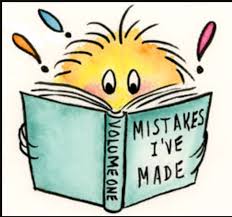
Self-correction is key during any activity. In a previous post we looked at the different ways of developing self-correction in order to improve accuracy. Today, however, we will turn to promoting self-awareness during activities. The main difference between accuracy and fluency activities in terms of self-correction, is that with the latter, it is all about the flow of the discussion. For this reason it is best (in most cases) to come back to the correction bit at the end of the activity. It goes without saying then that this implies that the teacher should dot down the mistakes made as the students are chatting away! Let´s look at how we can use this information to foster self-correction...

...But first a word on self-correction


Students should be given the opportunity to correct themselves. Sometimes all the teacher needs to do is give them a puzzled look or repeat the sentence back to them and they will correct themselves instantly. Using your body language is key to signal your students that something is up!

Questions


The simplest form of promoting self-correction is to ask questions about the mistake that was made. If the student answers correctly, it should be clear that it is not an ingrained error, but simply a slip. No further action might be necessary.

Multiple choice


Give student with a few sentences containing the mistake as well as some without the mistake. Get the student then to guess which one is correct.

Correct/Incorrect


Similar to the multiple choice one we just saw. Students have to decide whether a sentence the teacher calls out is correct or not.

Story


Another way of presenting the mistakes you, the teacher, picked up on is through a story.  Dictates a story containing the same mistakes that were heard during the activity and get the students try and find them all. Use a context with which the students can identify.

Peer correction


Students correcting each other can contribute to a conducive learning environment because this way students can see you are not the only source of correction and they can learn a lot fromore their classmates.

Speaking graph


Mumford and Dam propose that while the students are talking, the teacher should draw a line on a graph which represents the students’ level of speaking quality. When mistakes are made the line goes down. When the students are speaking well, it goes up. Make sure to highlight the positives and the negatives.


Remember: SELF-correction is what we want!


As a final thought it is remember to keep in mind that we use correction as a tool to harness students' self-awareness. Think of how you correct students and if it truly contributes to the self-correction aim.


download


19

October 2011
Current News - Republican Presidential Debate
by Radmila Gurkova
httpv://www.youtube.com/watch?v=gl-Ppk6oN0s "The near-weekly ritual of Republican presidential debates took a raucous turn Tuesday night as the unsettled field of candidates ganged up on one another in a series of attacks more intense and personal than any in their previous appearances together." "The first to feel the assault wa...

17

October 2011
Current News - Spain's Duchess of Alba ties the knot for the third time at 85!
by Radmila Gurkova
The Duchess of Alba, one of Spain's richest and most flamboyant women, has got married again at the age of 85 to a civil servant 24 years her junior.  However it hasn't been easy for her, as she is reportedly giving away her personal fortune in order to do so. httpv://youtu.be/k31NvQJfqao...

14

October 2011
Friday Meeting 14.10.2011
by Radmila Gurkova
How can we teach vocab activities?  What is the best way to teach vocabulary? Before speaking of vocabulary activities it is imperative that we distinguish between a Topic and a Vocab activity. A topic activity...

13

October 2011
Blackberry's message goes missing
by Radmila Gurkova
httpv://www.youtube.com/watch?v=kAG39jKi0lI For the makers of the device whose name became synonymous with messaging, it was a deeply embarrassing 36 hours. Untold numbers of Blackberry users, first in Europe then in much of the rest of the world, found that their email either slowed or ground to a halt and the BBM service became unavailabl...

12

October 2011
Oxbridge TEFL - Eddie Izzard on Language...
by Radmila Gurkova
httpv://www.youtube.com/watch?v=1hJQsvoY6VU Seeing as today is a holiday we thought it would be good to post a fun video of the comedian Eddie Izzard talking about language. Enjoy... ...

11

October 2011
David Cameron: we will never join the euro...
by Radmila Gurkova
httpv://www.youtube.com/watch?v=D8zRxbJQLy8 There have been tough words from the British prime minister at the annual Conservative Party conference, where David Cameron defended his government's economic policies. "The threat to the world economy and to Britain is as serious as in 2008 when world recession loomed. The euro zone is in cr...

10

October 2011
Steve Jobs 1955-2011
by Radmila Gurkova
httpv://www.youtube.com/watch?v=Izjtud9qbJ4&feature=youtube_gdata_player RIP Steve Jobs - his ideas and vision brightened millions of lives and the world of technology will be a poorer place without him. Here's to the crazy ones......

10

October 2011
Friday Meeting 07/10/2011
by Radmila Gurkova
A busy start to the month but here's little update for the week. Last week we spoke about the classes at the gym and the new S1 course. Feedback has been generally good in both areas but we there’s still plenty of room for improvement. ...

10

October 2011
Current News - Food Labeling
by Radmila Gurkova
httpv://www.youtube.com/watch?v=9f9m0JmCGeE Sell-by dates should be removed from food packaging to help cut waste and save shoppers money, ministers say.  The UK throws away about £12bn of edible food each year and critics say confusing packaging is partly to blame. Read the whole story and watch a video on the BBC News website: ...

10

October 2011
Current News - Are you Healthy!?
by Radmila Gurkova
httpv://www.youtube.com/watch?v=NJFrI5srZVI Denmark has introduced what is believed to be the world's first fat tax - a surcharge on foods that are high in saturated fat. Some scientists think saturated fat may be the wrong target. Click this link to read more: Denmar...