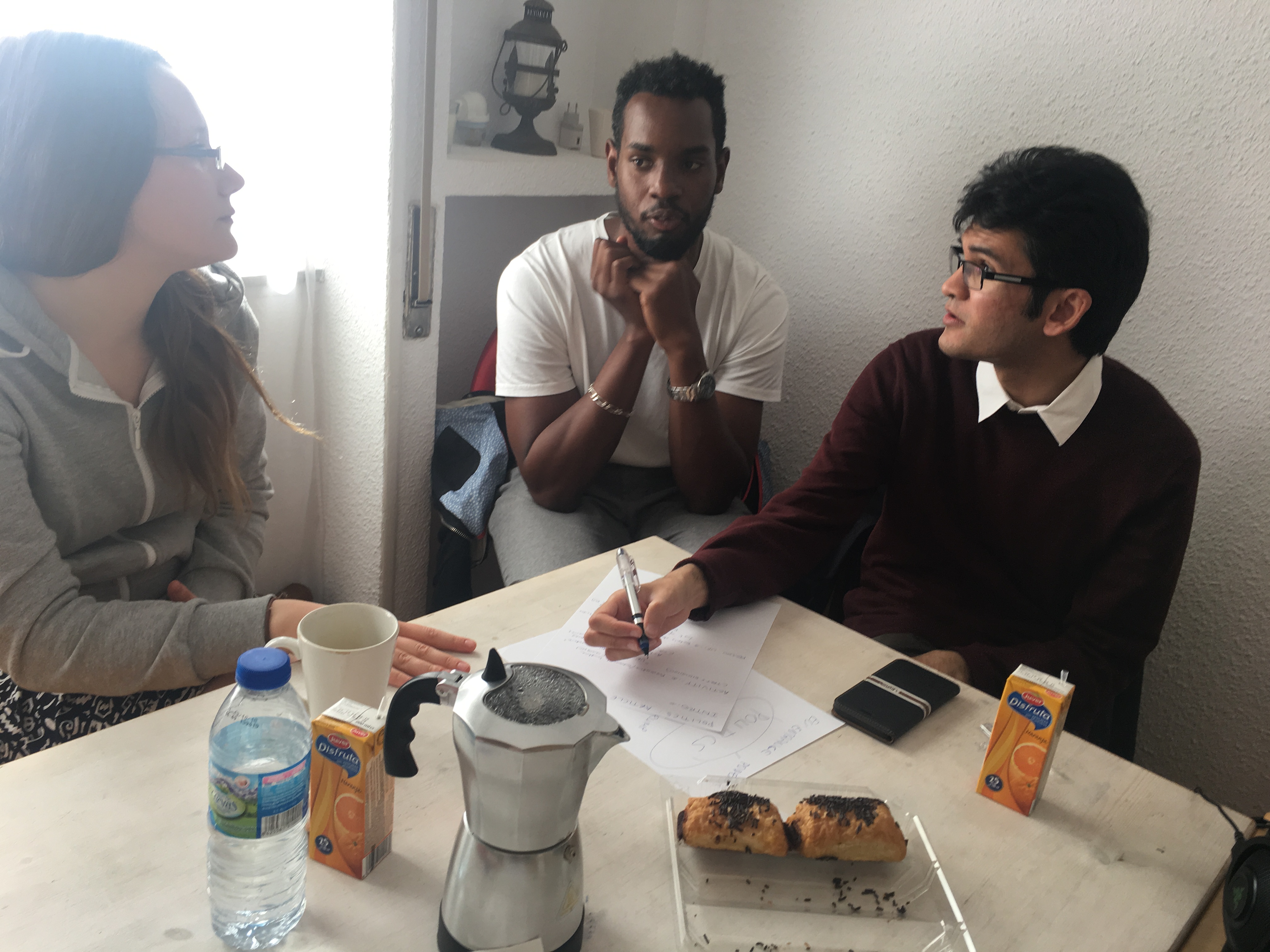
At Oxbridge, we develop our own materials and we are passionate about what we teach, hence, our priority is our students' engagement and challenge in topics and the quality of the material that we use in our lessons. This is why our Friday meetings are devoted to CPD (continuous professional development), collaborative work, sharing of experiences and ideas.
There are various and multiple factors that affect the engagement of students in a lesson, such as academic, behavioral, cognitive and affective. All of these are developed further in a previous
post by Vincent Chieppa. That´s the theory and those are factors that as a teacher can´t be controlled or changed, they can only be taken into consideration and work around them. But, what we have been discussing in our meetings is: what can WE do as teachers to ensure students engagement and challenge in topic activities? How can we bring that to our lessons? Simple: good resources and activities together with a good attitude. The good attitude with us is a given, so we´ve focussed on how can we create challenging and engaging activities, and for that, we have work collaboratively and brainstormed ideas.
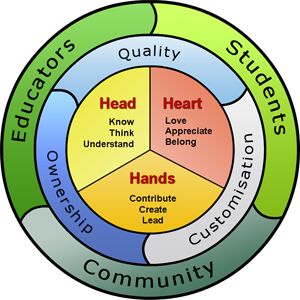
Structure of an engaging topic activity
First of all, we have thought of the structure of a topic activity. Firstly, we need an exercise to hook the student. That being:
- a list of target language so the students can guess what is the story behind the lesson
- a headline
- a picture
- an incomplete sentence
- a word to brainstorm around it
Once we have them hooked we have to introduce the topic with a text, a short clip or just a picture and a summary done by the teacher. What's next? How do we ensure the student understanding? We have the popular concept check questions, but, too much of a good thing can make you sick, isn´t it? Here are some other ideas:
- true false
- deduce meaning
- a, b, c
- match statements to paragraph
- Sequence the statements
- News reporter- students make questions about the text.
- Reformulate what was in the article taking the role of the story´s protagonist.
Just when our students are familiar with the topic and have acquired new vocabulary, expressions and/or structures it´s time to activate those. It´s the students time to speak. In order to achieve this we came up with different types of activities:
- What would you do if...?
- Listing pros and cons.
- Problem solving - how would you deal with… ?
- Suggest ideas to be developed - 3 facts now develop these or add 3 more.
- Comparison : reactions, borderlines enforcement, different sources, same thing in a different country or experienced by people from different backgrounds.
- Give the background history. Create a story line - BEFORE AND AFTER.
- Give sentences for them to report going around the table: maintaining the same meaning but using different words.
- Tree of different options - so if you choose x you get z, if you choose y you get a.
- Role play based on text. Discussion of topic/ideas/argument of the text
- e.g. an interview with a protagonist from the story
- Design something / task
- e.g. following an article on a new housing initiative, students plan a dream house
- Research project
- e.g. following an article about Homelessness in UK, what is the situation in the students' own country
- Narrative
- e.g. the next day's story, someone involved in the news event writing to a friend
- Debate
- Give a statement and students give their personal opinion.
- Give role cards or assign a role to the student to debate from that person or group´s perspective.
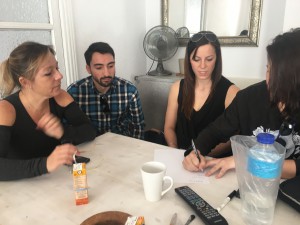
Not only we brainstormed these ideas but also we put them into practice in a "hands on" session in our Friday meeting. During these we brainstorm about different topics, such as:
- Sports: football, personalities, bikes, exercise, teamwork, values, health, hooligans, bets, education, Why we don´t have hooligans in tennis. Culture and politics.
- Nature: death, nature vs media, survival, eco turism, traveling, future, animal abuse, veganism, vegetarian, environment, sustainability, natural spaces, life in other planets,
- Music: festivals, culture, concerts, innovation, lifestyle, origins, identity, dress code, cities, musical mechs, youth and education.
- Life: innovation, lyfestile, psychology, gastronomy, death , social media, 4d printers , extraterrestrial life, statistics, role models, life after death, cheating death. transplants : head transplant, chips, artificial, human capacity , breaking records, technology pushing us beyond the limit, evolving , life and data, big data.
Just after we chose a topic out of these ideas and developed an activity in groups. We thought of the introduction, the topic´s input and the follow up activity to be done by the students. Once this was accomplished we played the game "pass the parcel" which, in this case was "pass the activity" to the other group. This group then suggested another activity about that same topic or improved the one that was already there. Not only we did this once, but twice, and just after we share the final result with the whole group. In less than an hour meeting we had created over five engaging and challenging activities which are going to be developed further and adapted to the different levels and included in our system. Voila!
The exchange of ideas and collaborative work in in teaching has proven to be the key for success!